If there’s one thing more valuable than traffic in e-commerce, it’s trust. You could be driving hundreds of St. Louis locals to your site every day, but without confidence in your platform, most won’t click “Buy Now.” That’s the quiet difference between a website that looks good and one that sells. Trust turns browsers into buyers.
For businesses in the Gateway City—where neighborhoods are tight-knit and reputation spreads fast—gaining online trust is both a challenge and an opportunity. Shoppers here appreciate businesses that are transparent, locally aware, and attentive to customer experience. And if your website can reflect that? You’re already ahead of the game.
So, what does it take to craft an e-commerce website that St. Louis customers actually trust? Let’s dig into the essentials.
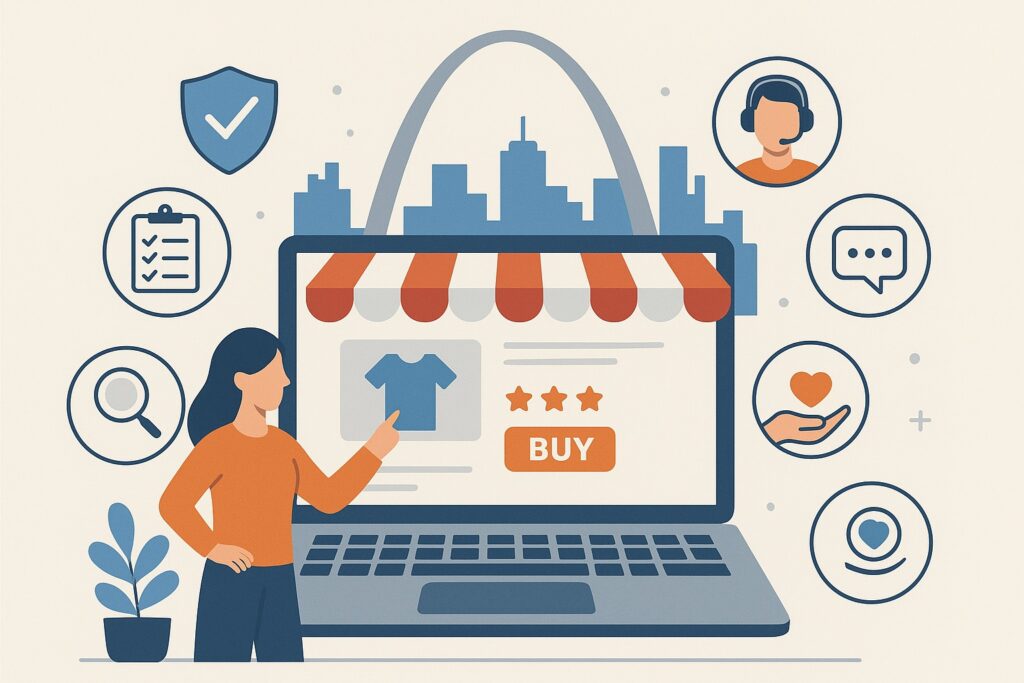
Start With What St. Louis Shoppers Care About
Every community has its own set of values, and in St. Louis, authenticity counts. You’re not just selling to a faceless audience—you’re talking to folks who may have grown up shopping on The Hill, spent weekends at Forest Park, or run businesses in Clayton. That sense of familiarity is a strength if you tap into it.
Begin by positioning your site as more than just an online store. Introduce your business in a way that shows you’re part of the community. Whether it’s through a heartfelt About page, photos of your local storefront, or even references to well-known STL events like LouFest or Taste of St. Louis, create a sense of home.
Local shoppers are far more likely to trust a site that feels like it understands their world.
Put Security Front and Center—Not in the Background
You can’t talk trust without talking security. Especially when money and personal information are involved, your website needs to radiate safety from the second it loads. While flashy animations or pop-ups might catch the eye, they’ll never make up for a browser warning that says, “Not secure.”
At a minimum:
- Your entire site should be HTTPS-enabled.
- Your checkout process should use encrypted payment processors like Stripe, Square, or PayPal.
- You should display SSL certificates and trust badges clearly—not just on the checkout page, but anywhere customers are making decisions.
And don’t overlook data transparency. Have a clear, concise privacy policy that explains how customer information is handled. A simple reassurance that you don’t sell or misuse data can go a long way in a privacy-conscious market.
Design Isn’t Just About Looks—It’s About Reassurance
Imagine walking into a store where the shelves are messy, signs are handwritten, and the lights flicker. Would you feel comfortable making a purchase? Probably not. The same principle applies to your digital storefront.
A well-designed e-commerce website builds trust through:
- Consistent visual branding – Fonts, colors, and logos should all reflect your business in a polished, professional way.
- Thoughtful user flow – Navigation should feel natural. Menus need to be organized, search functions intuitive, and product categories well-structured.
- Mobile performance – In St. Louis, more shoppers than ever are making purchases from their phones. If your mobile layout is clunky or slow, that trust will erode immediately.
Design is more than visual—it’s emotional. A site that’s smooth, intuitive, and modern tells visitors, “We know what we’re doing.”
Show Proof That People Like You—and Use You
Testimonials are the handshake of e-commerce. Without that face-to-face trust, your customers need to know someone else has taken the leap and come out satisfied.
Rather than filling your site with vague quotes, add:
- Real names (first and last if possible)
- Locations (“from Webster Groves” or “based in Florissant”)
- Photos, when available
- Links to reviews on third-party platforms like Google or Yelp
This kind of social proof is invaluable. If you can include screenshots of Facebook or Instagram shoutouts from local customers, even better. People trust people—especially those from their own city.
Policies Should Be Crystal Clear, Not Buried
Don’t make customers go hunting for key details. One of the biggest reasons people abandon carts? Uncertainty. They’re not sure how long shipping takes. They don’t know if returns are allowed. They can’t find your contact info.
That’s where transparency wins:
- List shipping times by location, especially if you offer quicker delivery to local ZIP codes.
- Spell out your return, exchange, and refund policies in plain English—no legal jargon.
- Display your phone number and business address prominently, especially if you operate out of a St. Louis storefront.
When people know what to expect, they feel safe making a purchase.
Involve the Community and Share Your Local Identity
One way to make your business memorable—and trustworthy—is to spotlight your community involvement. This could mean anything from donating a portion of proceeds to a local nonprofit, to sponsoring a youth sports team in South County.
Consider dedicating a section of your website to “Local Impact” or “Community Partnerships.” Post photos of local events you’ve supported, or even just blog updates about neighborhood news. These small touches go a long way toward making your website more than transactional.
They make it personal.
A Fast Site Is a Trusted Site
It doesn’t matter how great your products are if the site takes forever to load. Research shows that most visitors will leave a website that doesn’t load in under three seconds—and that bounce rate affects your Google ranking, too.
Use a content delivery network (CDN), optimize your image sizes, and avoid bloated plugins that drag down performance. If your hosting isn’t cutting it, invest in a provider that prioritizes speed.
Especially in metro areas like St. Louis where competition is tight, every second counts.
Support Should Be Human—and Reachable
Customer support isn’t just for fixing problems—it’s for building trust before the sale even happens. Live chat, contact forms, phone lines, and email should all be easily found and responsive.
Want to go a step further? Offer a “Local Help Desk” option for St. Louis customers. Even if it’s the same as your regular support, the local branding can make shoppers feel like they’re dealing with someone nearby who gets their needs.
Build a Site That Feels as Honest as Your Business
St. Louis is a city where reputation still matters. It’s where people support brands they believe in, where customers don’t just buy—they stick around. If your e-commerce website can reflect the same honesty, care, and attention to detail you’d bring to a real storefront in The Loop or Soulard, you’ll be more than a business. You’ll be a trusted part of the community.
And trust? That’s what keeps the sales coming.
The written content on this page was generated by ChatGPT.